Daylighting, potholing and trenching are often used interchangeably in conversations about hydrovac excavation, but they describe different objectives. Understanding the distinction helps contractors scope the work correctly and book the right amount of hydrovac support.
All three can involve non-destructive excavation, but the size of the excavation, information required and next construction activity are different.
DIGS performs each type of work across Calgary and Alberta. The right approach depends on what the project team needs to learn or build.
What Is Utility Daylighting?
Daylighting is the process of exposing buried infrastructure so its actual location, depth and orientation can be visually confirmed.
The excavation may be relatively small because the objective is information. Daylighting is commonly completed before mechanical excavation, drilling, road work, utility installation and infrastructure repairs.
What Is Potholing?
Potholing generally refers to creating a small test excavation to locate or verify an underground utility. In practice, potholing is one of the most common forms of daylighting.
A series of potholes can establish utility depth along a proposed trench or bore path and help the contractor understand crossings before construction begins.
What Is Hydrovac Trenching?
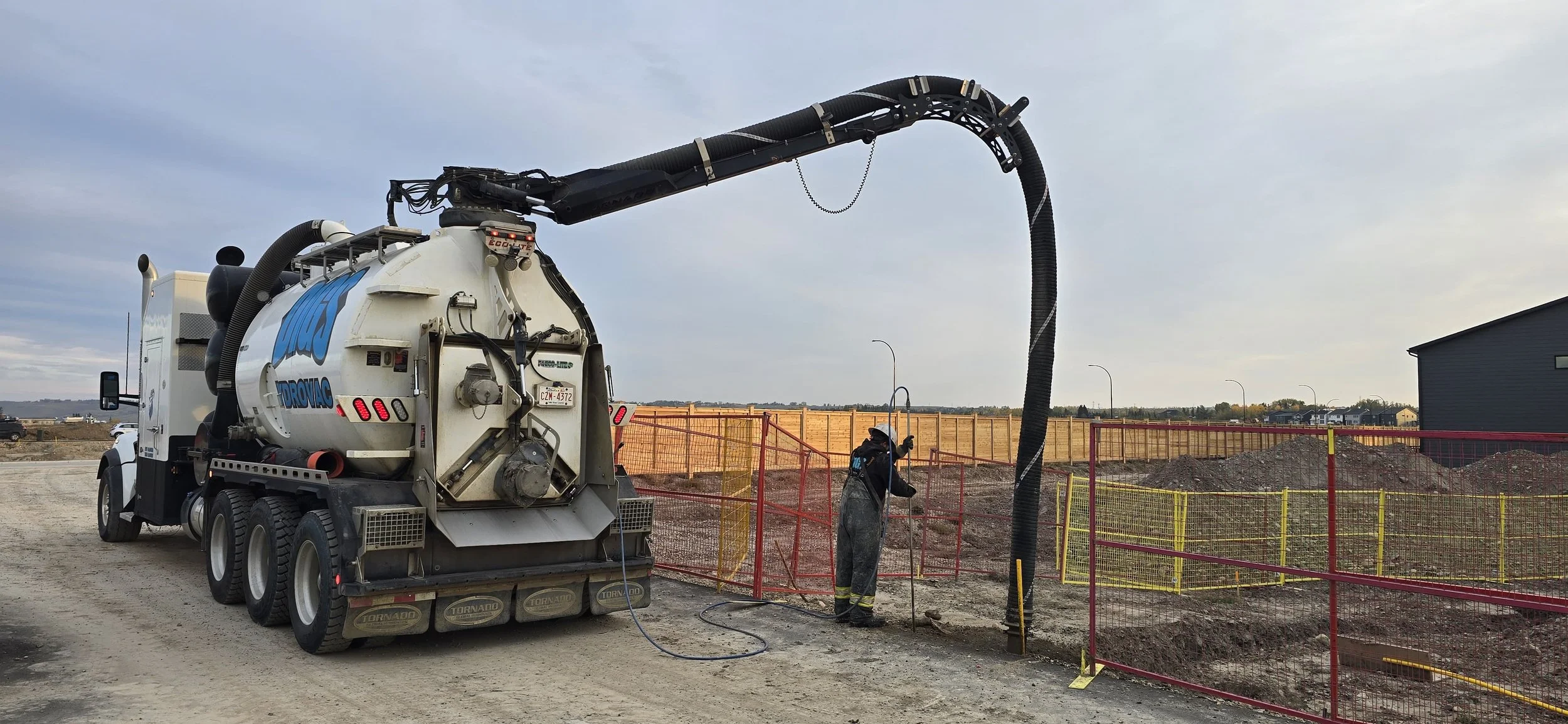
Hydrovac trenching removes material along a longer continuous alignment rather than at isolated verification points.
It can be useful where excavation must occur close to existing utilities, where a narrow trench is required, or where mechanical excavation is restricted. Depending on the project, hydrovac may complete the trench or work alongside an excavator.
When Daylighting Is the Right Choice
Choose daylighting when the primary objective is to see and verify existing infrastructure. Examples include confirming a gas line before excavation, exposing a water main before repair or verifying crossings before road construction.
The excavation only needs to provide the information and access required by the project.
When Potholing Is the Right Choice
Potholing is particularly useful when several specific points need verification. Directional drilling and linear utility projects often require potholes at crossings or intervals along a route.
It is also useful during pre-construction planning when engineers or contractors need field elevations.
When Trenching Is the Right Choice
Trenching is appropriate when the project requires a continuous excavation for installation, access or construction rather than isolated exposures.
Hydrovac trenching can provide control around congested infrastructure, but production expectations should reflect trench dimensions, depth, soil conditions, water and disposal.
Can the Methods Be Combined?
Yes. A project may begin with potholing, move to mechanical trench excavation and then use hydrovac again around congested crossings or tie-in points.
Using each method where it provides the most value can be more efficient than trying to complete the entire project with a single excavation approach.
How Scope Affects Cost and Scheduling
A request for ten potholes is fundamentally different from a request for a 30-metre trench. Depth, diameter, soil, access and disposal all influence production.
Providing dimensions and the intended outcome helps dispatch estimate the required time and equipment more accurately.
How DIGS Helps Contractors Choose the Right Approach
DIGS supports daylighting, potholing, trenching and combined excavation scopes across municipal, pipeline, telecom, residential, commercial and industrial projects.
If the project team knows what needs to be achieved but is uncertain about the best hydrovac approach, discussing the scope before mobilization can help establish a practical plan.
Frequently Asked Questions
Are daylighting and potholing the same thing?
They are closely related. Potholing is generally a small excavation used to daylight or verify a buried utility.
Can hydrovac dig a complete trench?
Yes, depending on dimensions, soil, access and project requirements. On some projects hydrovac works more efficiently in combination with mechanical excavation.
Why pothole before directional drilling?
Potholes physically verify utility depth and location at critical crossings along the proposed bore path.
Which method is best around congested utilities?
The correct method depends on the scope. Hydrovac daylighting and precision trenching can both reduce risk around existing infrastructure.
Need hydrovac support for your next project?
DIGS Hydrovac provides safe, responsive excavation support across Calgary, Edmonton and Alberta. Our experienced operators support planned projects, time-sensitive infrastructure work and 24/7 requirements.