What Contractors Should Know Before Booking a Hydrovac in Calgary
Hydrovac excavation can be one of the most efficient ways to safely expose buried infrastructure, daylight utilities, support trenching and complete precision excavation. But the truck itself is only part of the equation. The best hydrovac jobs are usually the ones that have been planned properly before the unit arrives.
For contractors, superintendents and project managers in Calgary, a little preparation can make a significant difference to productivity, cost control and schedule. Clear scope, confirmed utility locates, realistic access, a disposal plan and communication between trades allow the hydrovac crew to spend more of the shift excavating and less time waiting for decisions.
At DIGS Hydrovac, we work across municipal, commercial, residential, industrial, telecom and energy projects. The following are some of the practical items we recommend considering before booking a hydrovac.
Start With a Clear Scope of Work
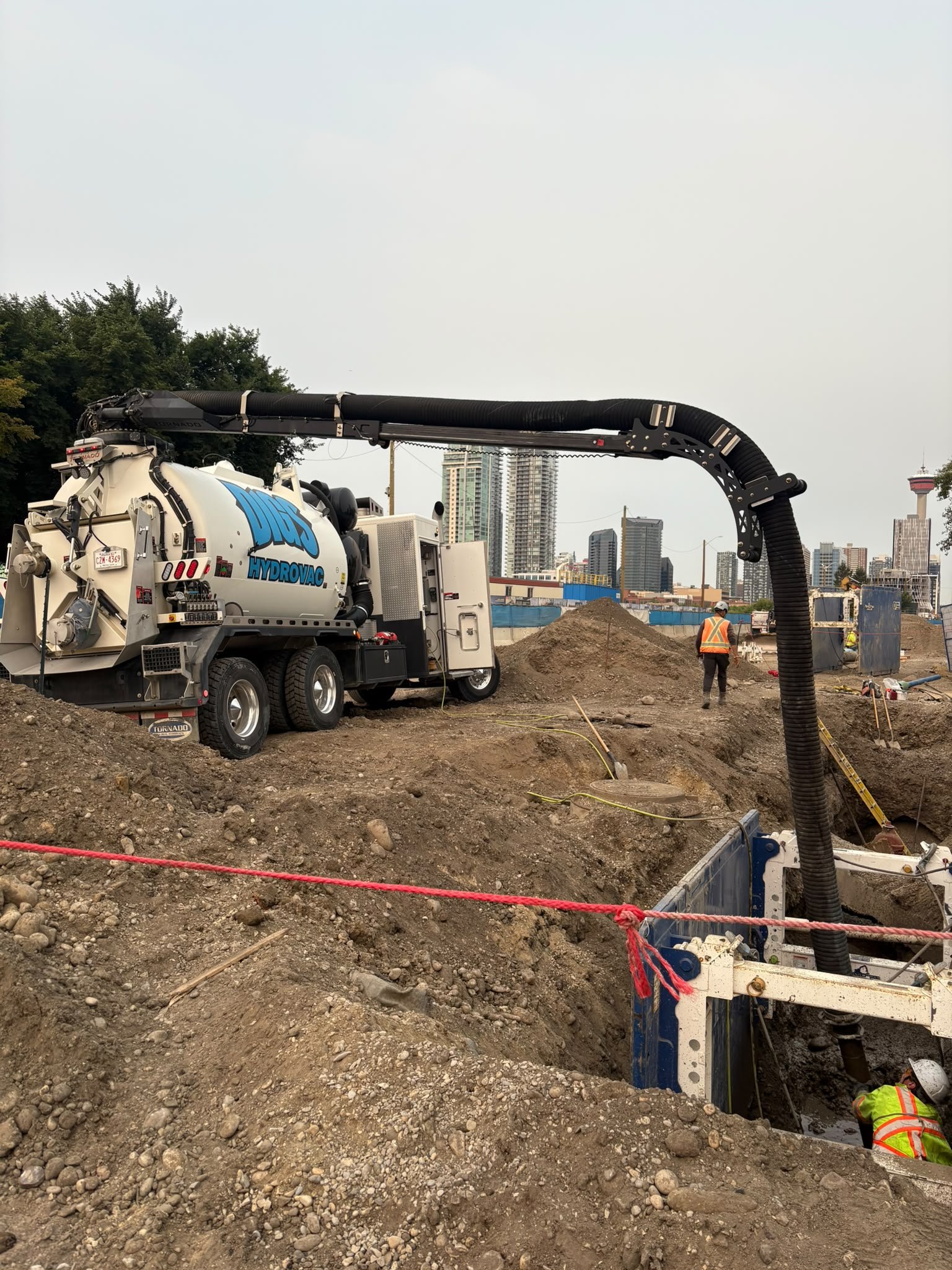
A request for “a hydrovac” can mean very different things. A crew may be daylighting several utility crossings, exposing a service connection, supporting a trench, excavating around a valve, cleaning a structure or running remote hose into an area the truck cannot reach.
Before dispatch, identify what needs to be exposed, the approximate number and size of excavations, expected depths, whether the work is continuous or intermittent, and which trade will be working behind the hydrovac. This helps match the equipment and schedule to the actual task.
Photos, drawings and a quick site conversation can be valuable on unusual scopes. The more accurately the work is understood before mobilization, the easier it is to arrive prepared.
Confirm Utility Locates and Site Requirements
Hydrovac is a non-destructive excavation method, but it does not replace the need for proper project planning and utility locating. Contractors should ensure required locates, permits and site-specific documentation are in place before excavation begins.
Paint, flags, drawings and field information should be understandable to the operator. When multiple utilities are concentrated in one corridor, confirming which asset needs to be exposed and why helps the operator approach the excavation deliberately.
Think About Truck Access Before the Unit Arrives
A full-size hydrovac requires space. Consider road access, turning radius, overhead restrictions, soft ground, traffic control, proximity to the excavation and whether the truck can safely position without interfering with other equipment.
When direct access is limited, remote hose can allow excavation to continue at considerable distance from the truck. That can be useful behind buildings, inside compounds, across landscaped areas, down slopes and in other restricted locations. Remote hose work should be identified in advance because it changes setup, labour and production expectations.
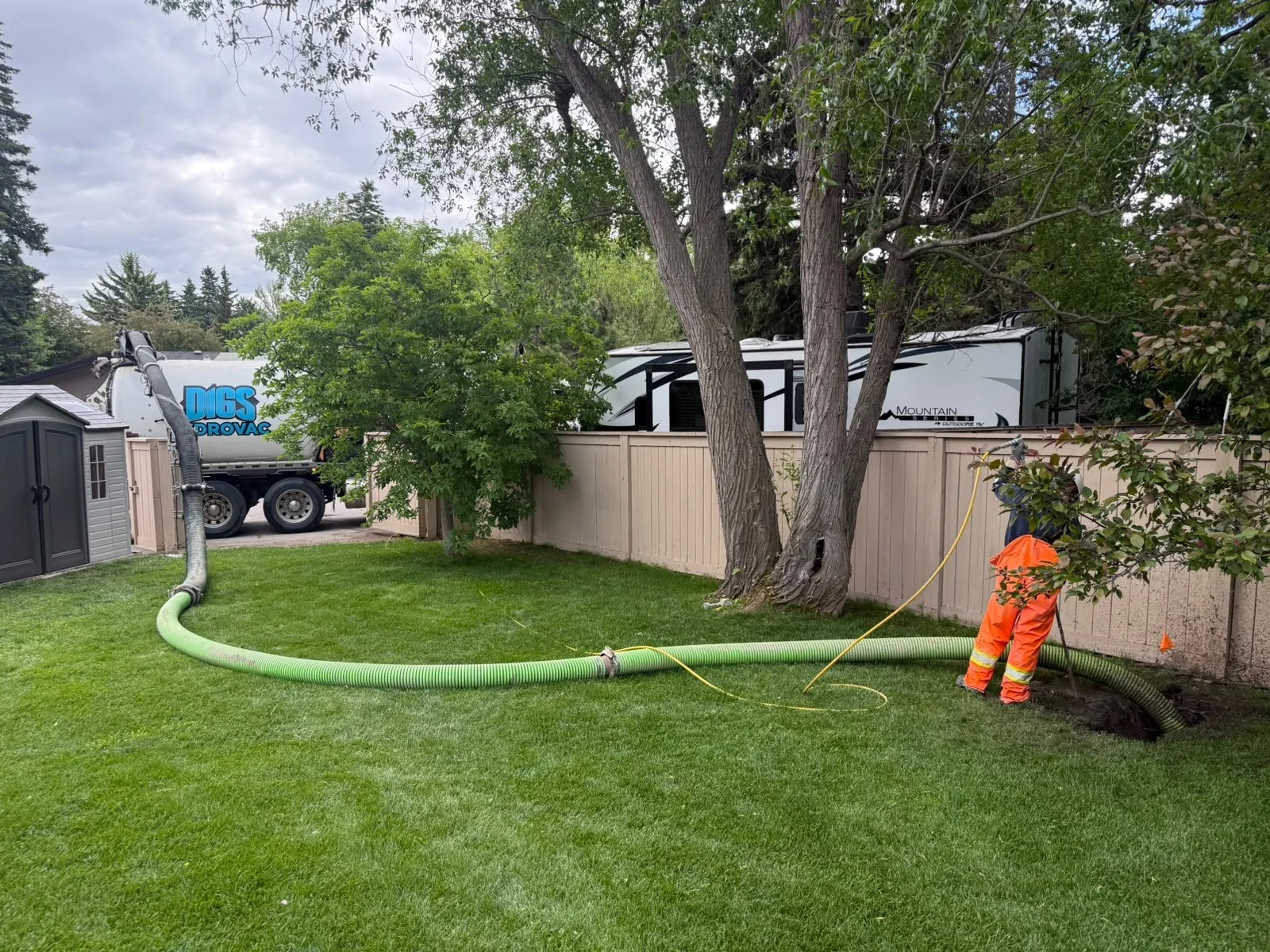
DIGS Hydrovac extending remote hose into a restricted-access excavation in a residential Calgary community.
Reducing Risk and Improving Safety
By providing controlled excavation, hydrovac reduces the likelihood of damage and improves overall jobsite safety.
This is particularly important in projects where the margin for error is small.
Water and Disposal Affect Production
Hydrovac excavation uses water to break up soil and vacuum the resulting slurry into the debris tank. Water supply and disposal logistics therefore have a direct impact on the working day.
On some projects, water is readily available. On others, the hydrovac must leave the work area to refill. The same applies to disposal. Travel distance, approved disposal facilities, material type and site requirements can all influence cycle time.
Contractors should consider these logistics when estimating how much excavation can realistically be completed in a shift. DIGS can help coordinate water and disposal planning when the project requires it.
Coordinate the Hydrovac With the Other Trades
Hydrovac is frequently one step in a larger sequence. An electrician may need the service exposed. A pipe crew may be waiting to make a repair. An excavator may need confirmed utility depths before opening a trench. A drilling crew may need crossings daylighted before boring.
The hydrovac schedule should reflect that sequence. Bringing the truck too early can leave exposed infrastructure waiting unnecessarily. Bringing it too late can hold up an entire crew. Good communication between the superintendent, hydrovac operator and following trade helps keep the project moving.
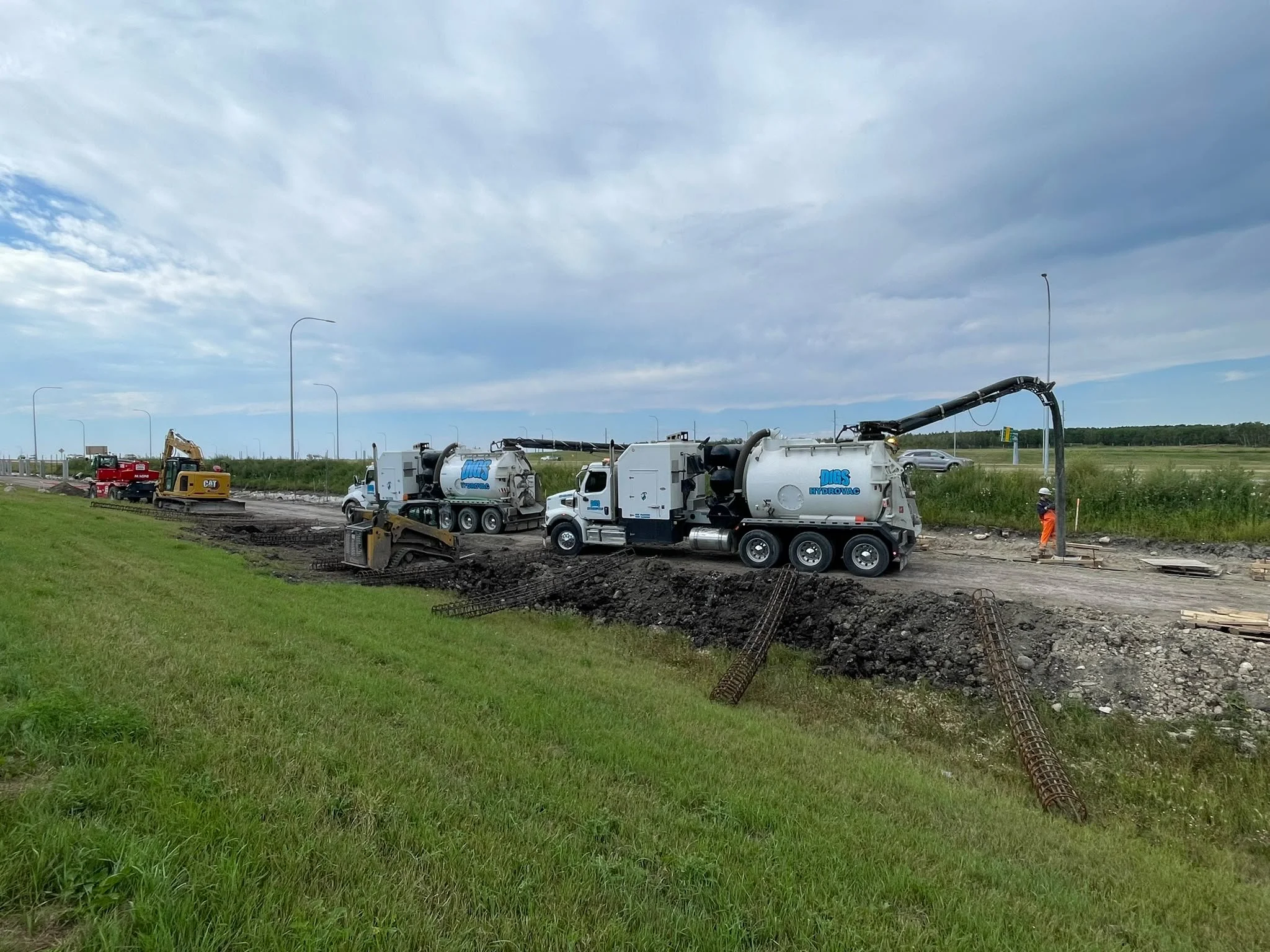
Hydrovac operations running alongside other trades on an active job site.
Plan Differently for Winter Work
Frozen Alberta ground changes excavation conditions. Heated water allows hydrovac crews to work through frost, but production can differ from summer conditions depending on frost depth, soil type, excavation size and weather.
Winter projects should also account for icy access, water management and safe positioning of equipment. Experienced operators understand how to adjust technique while protecting buried infrastructure.
Understand What Drives Hydrovac Cost
Hourly rate matters, but it is not the only factor determining the final cost of a hydrovac scope. Travel, water, disposal, remote hose, difficult soils, depth, access, waiting time and coordination can all affect the total.
The cheapest hourly truck is not necessarily the lowest-cost solution if the crew is inefficient or the project spends significant time waiting. Contractors should evaluate hydrovac support based on productivity, operator experience, reliability and the ability to integrate with the rest of the project.
How DIGS Approaches Scheduled Hydrovac Work
DIGS focuses on arriving prepared, understanding the scope and communicating with field supervision. Our experienced operators work with modern equipment across Calgary and Alberta and support both scheduled and urgent excavation requirements.
We provide hydrovac excavation, utility daylighting, potholing, trenching support, remote hose, line jetting, municipal and infrastructure support, pipeline and energy work, telecom and residential construction support. For time-sensitive projects, 24/7 dispatch allows us to respond when the work cannot wait.
Frequently Asked Questions
How much notice should I give when booking a hydrovac?
More notice gives dispatch greater flexibility, particularly for larger or multi-day scopes. DIGS also supports urgent and 24/7 requirements when availability allows.
Can a hydrovac work if the truck cannot get beside the excavation?
Often, yes. Remote hose can extend excavation capability into restricted-access areas. The site and required hose distance should be discussed before mobilization.
What should be ready before the truck arrives?
Required locates and permits, a clear excavation scope, safe access, traffic or site controls, and a plan for water and disposal where applicable.
Can hydrovac excavation be performed in winter?
Yes. Heated water allows hydrovac excavation in frozen ground, although frost depth and weather can affect production.
Contact Us
Need hydrovac support for your next project?
DIGS Hydrovac provides safe, responsive excavation support across Calgary, Edmonton and Alberta. Our experienced operators support planned projects, time-sensitive infrastructure work and 24/7 requirements.