Water, Slurry and Disposal: What Happens to Material Removed by a Hydrovac?
When people watch a hydrovac excavate, most attention goes to the hole. Pressurized water breaks the soil and a vacuum hose removes the material almost immediately. What is less visible is what happens next.
The excavated mixture of soil and water, commonly referred to as slurry or hydrovac material, is stored in the truck's debris tank and must eventually be managed and disposed of in accordance with project and facility requirements.
For contractors, water and disposal logistics can have a significant impact on productivity and project cost. Understanding the complete cycle helps create more realistic hydrovac schedules.
How Hydrovac Creates Slurry
Hydrovac excavation introduces water into the soil to loosen material. The vacuum system then lifts that material into the debris tank.
The consistency of the resulting material varies. Clay, sand, gravel, fill, frozen soil and groundwater conditions can all produce different debris characteristics and affect tank capacity and excavation efficiency.
The Debris Tank Has a Finite Capacity
A hydrovac cannot excavate indefinitely. As material accumulates, the truck eventually needs to leave the excavation and unload at an appropriate location.
The amount of productive excavation between dumps depends on the material, water use and the truck's capacity. Efficient operators manage water carefully because unnecessary water can consume tank capacity without producing more excavation.
Why Water Supply Matters
Hydrovac equipment also requires a dependable water supply. If the truck must travel a significant distance to refill, that travel becomes part of the production cycle.
On remote projects, water planning can be as important as disposal planning. Supplemental water truck support may help reduce interruptions depending on the scope and site.
Where Hydrovac Material Goes
Disposal requirements vary by material, location and project. Contractors should identify approved disposal options and any restrictions before work begins.
Material from an ordinary utility excavation is not automatically treated the same as material from a site with environmental concerns. Project-specific requirements and receiving-facility rules must be followed.
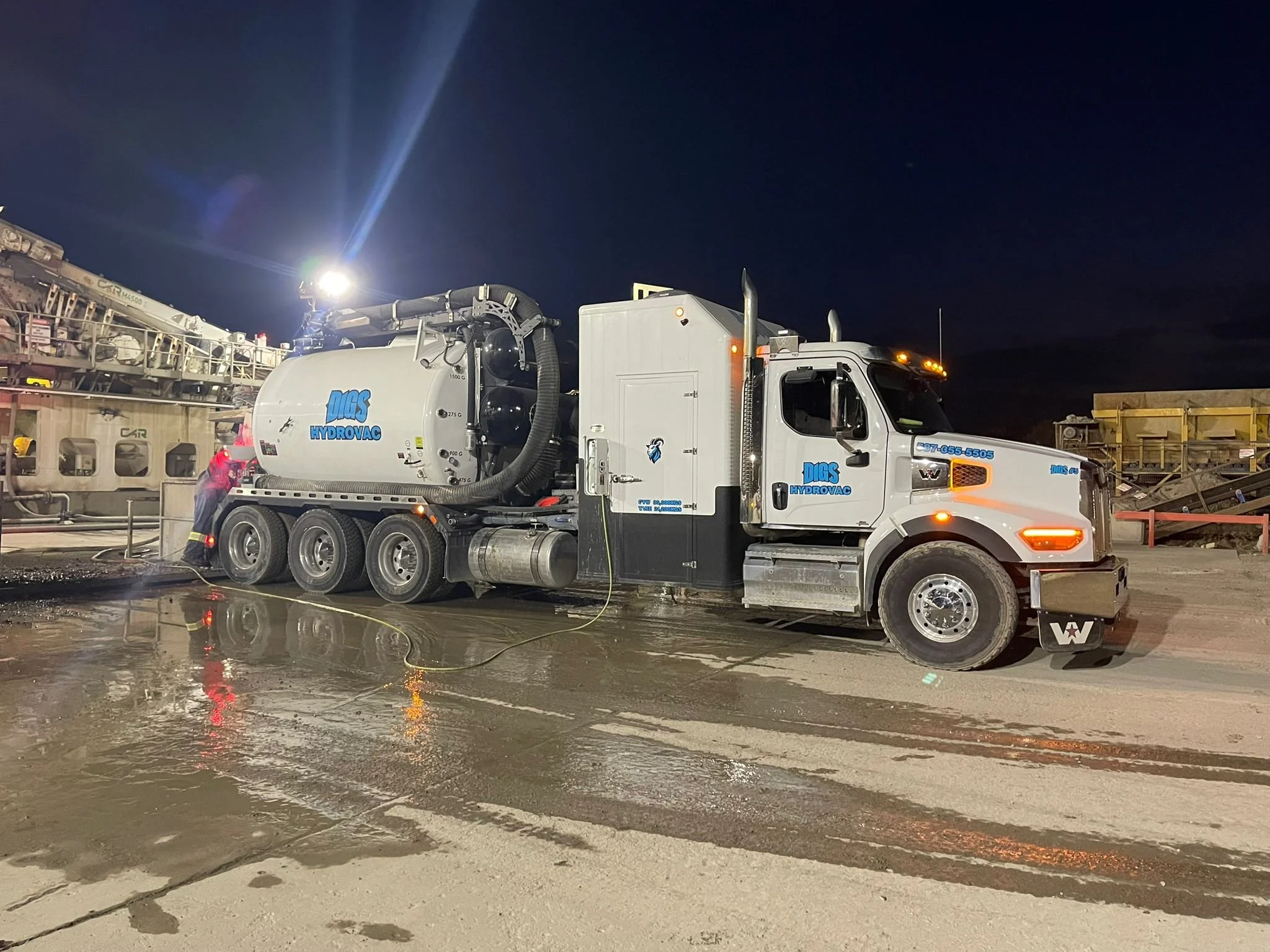
A DIGS hydrovac unit offloading slurry and washing out its debris tank at a licensed disposal facility
Why Disposal Distance Affects the Schedule
If a truck spends significant time travelling between the excavation and disposal facility, the number of productive excavation cycles in a day decreases.
This is why hydrovac estimates should consider the complete operating cycle: travel to site, setup, excavation, water, dumping and return. Focusing only on excavation speed can create unrealistic expectations.
Spoil Management on Large or Remote Projects
Multi-day projects benefit from a disposal plan established before the first truck arrives. The team should know where material can go, facility hours, travel routes and any documentation requirements.
On remote pipeline and infrastructure work, coordinating water and spoil movement can help keep the hydrovac at the excavation rather than on the road.
Can Hydrovac Material Be Reused?
Whether excavated material can be processed or reused depends on the material, project specifications, environmental requirements and local disposal or processing options.
Contractors should not assume slurry can simply be returned to the excavation. The appropriate method should be determined for the specific project.
How DIGS Plans Water and Disposal
DIGS looks at water and disposal as part of project execution, not an afterthought. For larger scopes, remote projects and schedule-sensitive work, we discuss these logistics with the customer before mobilization.
Our goal is to maximize productive excavation while meeting project requirements and coordinating responsibly with approved water and disposal resources.
Frequently Asked Questions
What is hydrovac slurry?
It is the mixture of excavated soil and water collected by the hydrovac vacuum system and stored in the debris tank.
Why does a hydrovac need to leave the site?
The unit may need to refill water or unload excavated material once tank capacity is reached.
Can hydrovac slurry be dumped anywhere?
No. Disposal must follow applicable project requirements and the rules of an appropriate receiving facility.
Does disposal affect hydrovac pricing?
It can. Disposal fees, travel time, material type and distance to an approved facility can affect the total project cost.
Need hydrovac support for your next project?
DIGS Hydrovac provides safe, responsive excavation support across Calgary, Edmonton and Alberta. Our experienced operators support planned projects, time-sensitive infrastructure work and 24/7 requirements.